The 7 Habits

Ashley Watson • January 25, 2026

Routines, Risk, and Radiographs: Building a Framework for Stress-Free Implant Dentistry
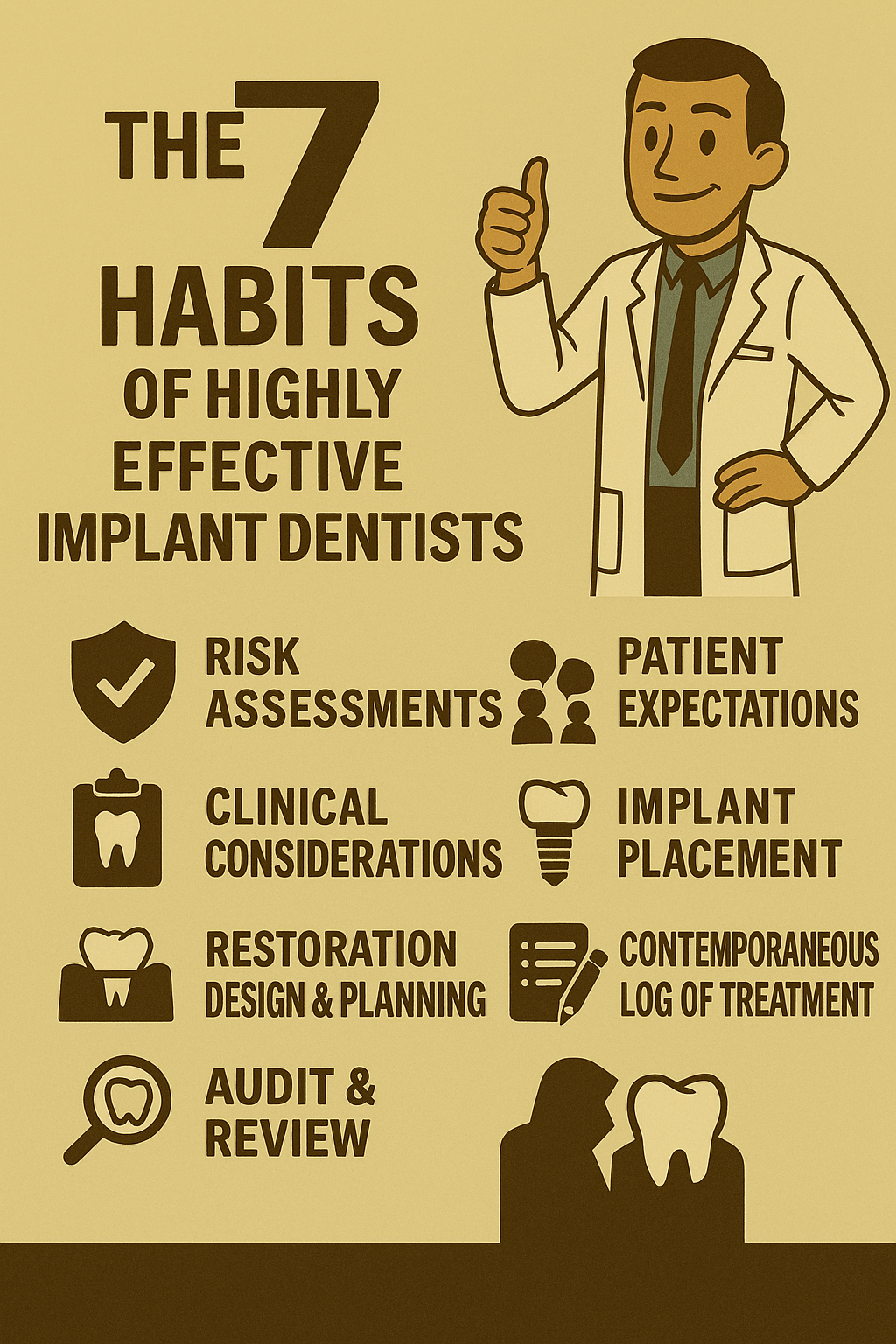
The Seven Habits of Highly Effective Implant Dentists (Sort Of)

Why Protocols Reduce Stress—And Improve Outcomes

One of the best ways I’ve found to reduce stress in clinical practice is to build routines and protocols for the day-to-day stuff. That way, when things get challenging, it’s more fun than frantic.

I’m not talking about becoming an automaton—carrying out treatment without thought or nuance. I mean having a framework that reduces the number of decisions you need to make on the spot. It frees up cognitive space for the real challenges.

Stephen R. Covey’s The Seven Habits of Highly Effective People is one of the best reads for any professional. You’ll hear people refer to its principles in everyday conversation. Dentistry isn’t so different. So I’ve borrowed the title—loosely—to outline the habits I believe every implant dentist should adopt.

The Core Principles of Implant Care

Let’s call these the “seven-ish” habits:

  1. Risk Assessments
  2. Patient Expectations
  3. Clinical Considerations
  4. Implant Placement
  5. Restoration
  6. Design & Planning
  7. Contemporaneous Log of Treatment
  8. Audit & Review

Okay, I know that’s not exactly seven—but close enough.

Habit 1: Risk Assessments Should Be Methodical

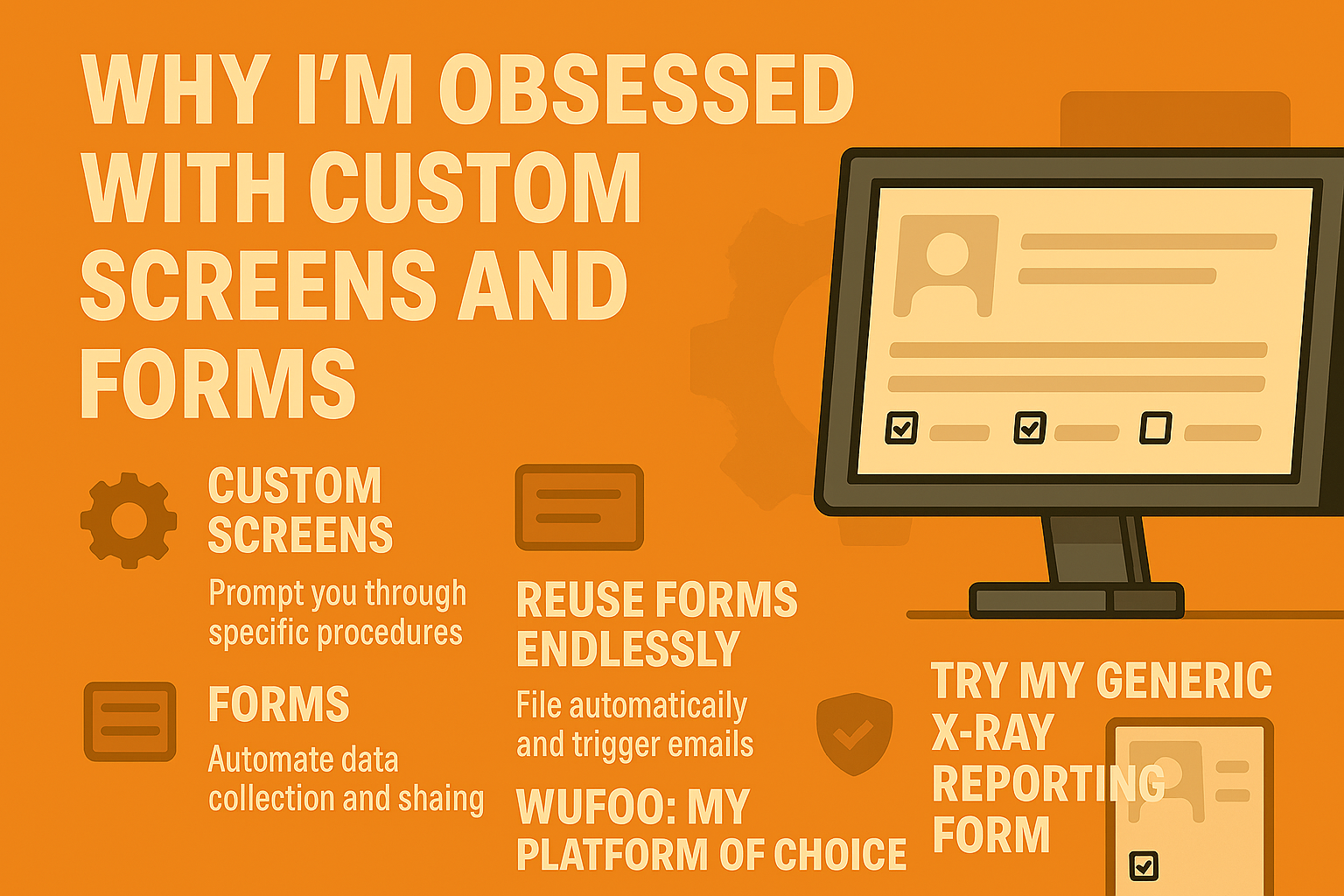
I use a custom screen on Exact. And no—it’s not prefilled. Every data field must be clicked for a response, or it stays blank. Atul Gawande’s The Checklist Manifesto was clearly written with me in mind.

If you don’t have a custom screen, the ITI’s SAC assessment tool is a good start. It’ll give you a sense of case complexity and can be saved as a PDF in the patient’s notes. But remember: complexity is just one piece. A comprehensive assessment of patient expectations and clinical considerations is essential. If you’re unsure what that means, the ITI has excellent CPD resources.

Habit 2: Plan from the Final Restoration Backwards

All implants should be planned based on the final restoration. Radiographic imaging—especially CBCTs—should relate directly to the guides you’re using. Guesswork isn’t good enough.

You don’t need the latest digital intraoral scanner to do this. A denture with a radio-opaque tooth before the x-rays, converted into a guide, can be nearly as effective.

Habit 3: Guided Surgery Is No Longer Controversial

Guided surgery is definitively more accurate than freehand placement. The closer you get to fully guided, the better. Good planning at the beginning prevents amplified mistakes later. Your lab will thank you, and your implants will suffer less inflammation and infection.

Do not accept poor-quality guides from a lab—no matter how experienced they claim to be. A guide that isn’t stable is stressful and poor value. And having a guide is not a defence for poor placement.

Habit 4: Keep a Log—Or Don’t Place

If you’re not keeping a log of treatment—including types, makes, and serial numbers of implant hardware—you shouldn’t be placing. It’s your moral duty to ensure the product is traceable and replaceable with minimal stress. That includes choosing suppliers who won’t vanish overnight.

Habit 5: Follow-Up Is Your Responsibility

Checking that the patient is maintaining their implants is your responsibility—even if you delegate it. Referrers and auxiliaries need to know what failure looks like and report it early.

Habit 6: Audit and Reflect Honestly

Audit your success annually—or per implant. It’s the only way to improve your technique. “Sharpening the saw,” as Covey would say, requires total transparency and honest self-reflection.

Habit 7: Mentoring Starts with a Foundation

Whenever someone asks me about mentoring, I want to know these principles are already in place. They’re the minimum standard for implant treatment. Without them, we’re not building—we’re guessing.


Whenever someone asks me about mentoring I like to know that the above principles are in place before we start, I think they have to be regarded as the basic minimum when it comes to implant treatments.


ID Blog
By Ashley Watson January 26, 2026
Computers were supposed to make our lives easier. Some days, they do. Other days, they feel like passive-aggressive filing cabinets with a superiority complex.
By Ashley Watson January 25, 2026
Why Won’t You Do What I Ask? Dentistry Isn’t Retail—It’s Healthcare 
By Ashley Watson January 25, 2026
“From late‑night typing to instant, intelligent notes — the future of dental documentation has arrived.”
By Ashley Watson January 25, 2026
The Evolution of Dental Record Keeping: From Paper Mountains to Cloud-Based Efficiency Why Good Records Matter More Than Ever Accurate, concise, contemporaneous notes have always been the backbone of safe and effective dentistry. They protect clinicians medico‑legally and allow us to deliver better, more consistent care—without drowning in administrative overload. The Early Days: A Room Full of Billy Bookcases When I began practicing in 1993, the practice I joined had an entire room dedicated to record storage. Billy bookcases bowed under the weight of manila files stuffed with biro‑scribbled hieroglyphics, decades of notes, and the occasional x‑ray. Some even contained dentures or toothbrushes to prevent them from going astray. Every morning involved pulling the day’s cards from the archive and forcing the previous day’s notes back into the labyrinth. Emergencies had to wait until someone could brave the paper maze to locate the right file. It was a system held together by habit, hope, and a lot of elbow grease. The First Wave of Digital Dentistry By the mid‑1980s, Customer Relationship Management (CRM) software began creeping into dental practices. Early platforms like Clockwork were text‑based and rudimentary, but they marked the beginning of a digital shift. For many clinicians over the last decade, Exact by Software of Excellence became the standard. It offered powerful features and add‑ons, but as time went on, it grew increasingly clunky. The core issue was its architecture: locally installed software requiring constant hardware upgrades, network tinkering, and hefty backup solutions. I remember spending entire weekends upgrading versions, genuinely excited by even the smallest new feature. The Cloud Arrives: Dentally Changes the Game Then came Dentally , a cloud‑based platform that redefined what dental software could be. Remote login, instant updates, and near‑limitless scalability made it a breath of fresh air. Initially, many clinicians resisted the shift—understandably attached to the familiarity of practice‑based systems. But Dentally’s intuitive interface and flexibility quickly won over the market. SoE eventually absorbed Dentally, recognising the direction the industry was heading. The Only Real Challenge: Letting Go of the Old Switching systems always comes with growing pains. Customising new software and saying goodbye to years of templates and workflows can feel daunting. But with a bit of focused onboarding—often done remotely—you’ll soon be generating bespoke treatment plans in seconds. And if Dentally’s AI note‑taking continues to evolve, it may well rival platforms like Kiroku and reshape how we document care entirely. Looking Ahead: A Future Beyond the Keyboard The pace of change in dental technology is accelerating. Cloud platforms, AI‑assisted notes, and automated workflows are already transforming the way we practice. Who knows—perhaps in the not‑too‑distant future, we won’t need to tap a keyboard at all. If you’d like, I can also craft an SEO‑friendly introduction or conclusion tailored to your target audience, or help you optimise image alt text for your comic strip.
By Ashley Watson September 27, 2021
There are plenty of things you can do without power, and I don’t mean just handing out antibiotics because the guidelines have been relaxed to meet the need of the current government failings! My trip to Ghana with 30 undergraduates taught me this. Prepare yourself for action: 1. Buy a head torch and a really good hand torch that your nurse can hold 2. Stock up on cotton swabs 3. Make sure you have a go to temporary filling material that is sedative where possible 4. Don’t back yourself into any corners you can’t retreat from When your dental unit stops working the most annoying thing to fail is not the chair or the handpiece, its not even the suction, because even if you get the last wheeze of air from your compressor, if you can’t see what you are doing it is useless. I found that a head-torch or better still your loupes with a light are a dentist’s best friend in these situations. Because head torches were designed for making a cup of tea in a tent, if your nurse can hold a good quality hand torch as well this helps. Moisture control need not be an issue if you have enough sterile swabs and cotton rolls and you are a master in the art without suction. Saliva is easily soaked up or spat into a spittoon and in the worst scenario where a patient is bleeding, pressure and a reassuring manner can slow even the most persistent sites. It’s unlikely that you are going to be worrying about keeping patients waiting so you have all the time in the world to look after the patient in the chair. Whenever you work, you will have an end goal in mind, but remember your training and don’t cut away all your options too early in the preparation. It’s much easier to put on a temporary crown with two interproximal slices rather than just the occlusal reduction, so rethink your protocols, and build in some provision for temporisation at every stage. Even if you are in the middle of an extraction you don’t have to finish if you have an emergency power outage. I often think dentists make a mistake spending hours trying to find a root tip or chasing a brittle, dilacerated monster. If you give up after a maximum of 20 minutes, the patient rarely gets as much pain healing if you leave them alone, than if you successfully retrieved the root. After six weeks the gum would have healed over so a grateful surgeon can go in retrieve the last bit and will have some tissue to raise a flap and cover it all up again afterwards. So, in summary, when an extraction doesn’t go your way; drain any infection, remove all the irritating sharp supragingival dentine and then give up! I have had to escort a patient from the chair midway through an implant procedure and dump them on the gilded streets of London because of a fire alarm and evacuation, but thanks to a neat flap and plenty of swabs this wasn’t a problem. Keeping calm in the weirdest situations can almost be amusing for you and the patients. The patient in the chair will appreciate that you are doing your best in difficult times, and the patients waiting will understand as long as they are kept informed. The most important thing is that you have a plan which will keep you calm and the patients will feel reassured they are in the right place. Don’t be too quick to send everyone home either, you’ll be surprised how much you can do for someone in pain even without power, and it won’t be long before the power comes back on!
By Ashley Watson December 1, 2020
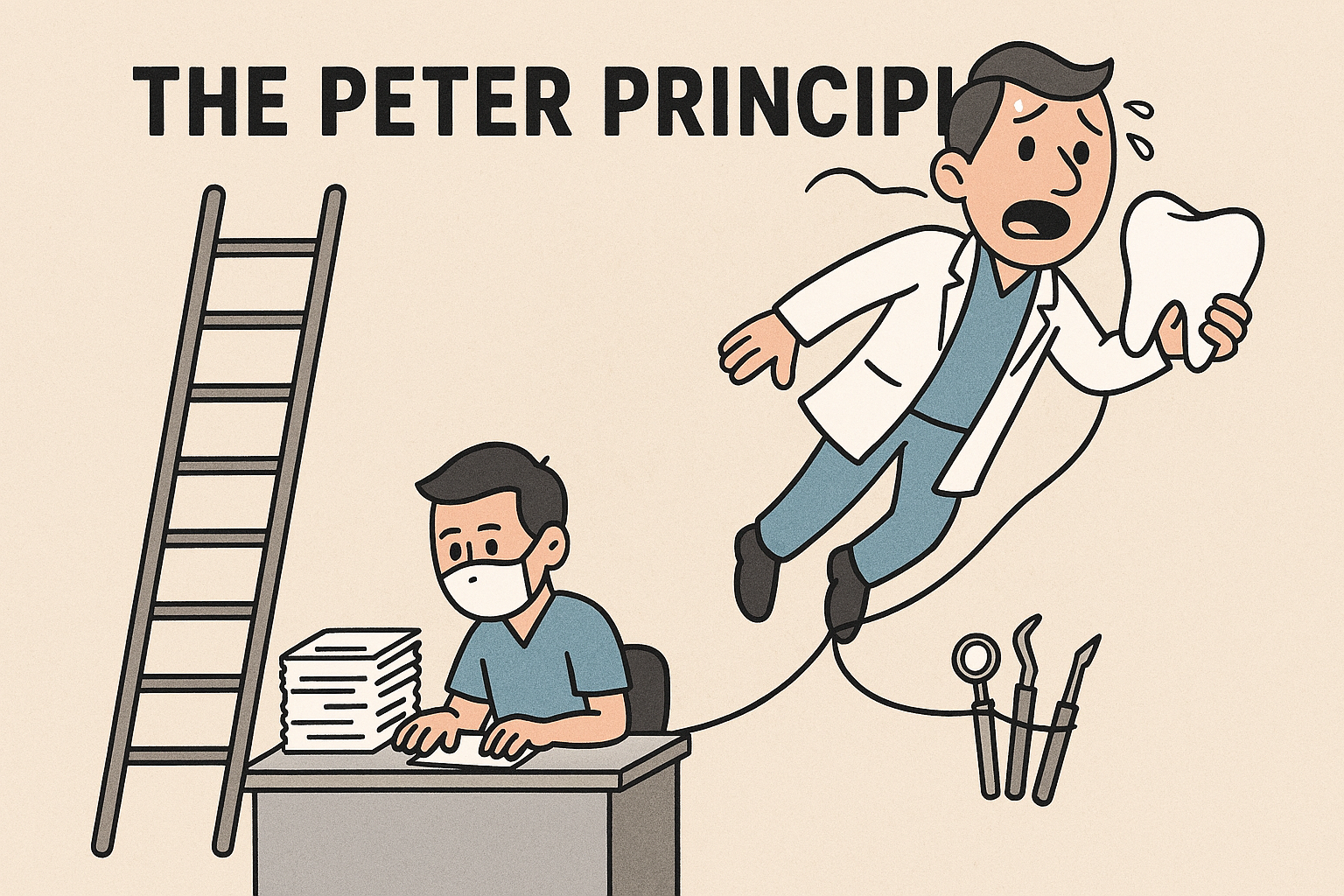
The "Peter Principle"
By Ashley Watson November 12, 2020
If you hear the word “just” before a treatment request, cancel lunch and brace for impact.
By Ashley Watson October 13, 2020
“Ask a dentist what lab they use and you’re not making small talk—you’re poking the beehive.”
By Ashley Watson September 29, 2020
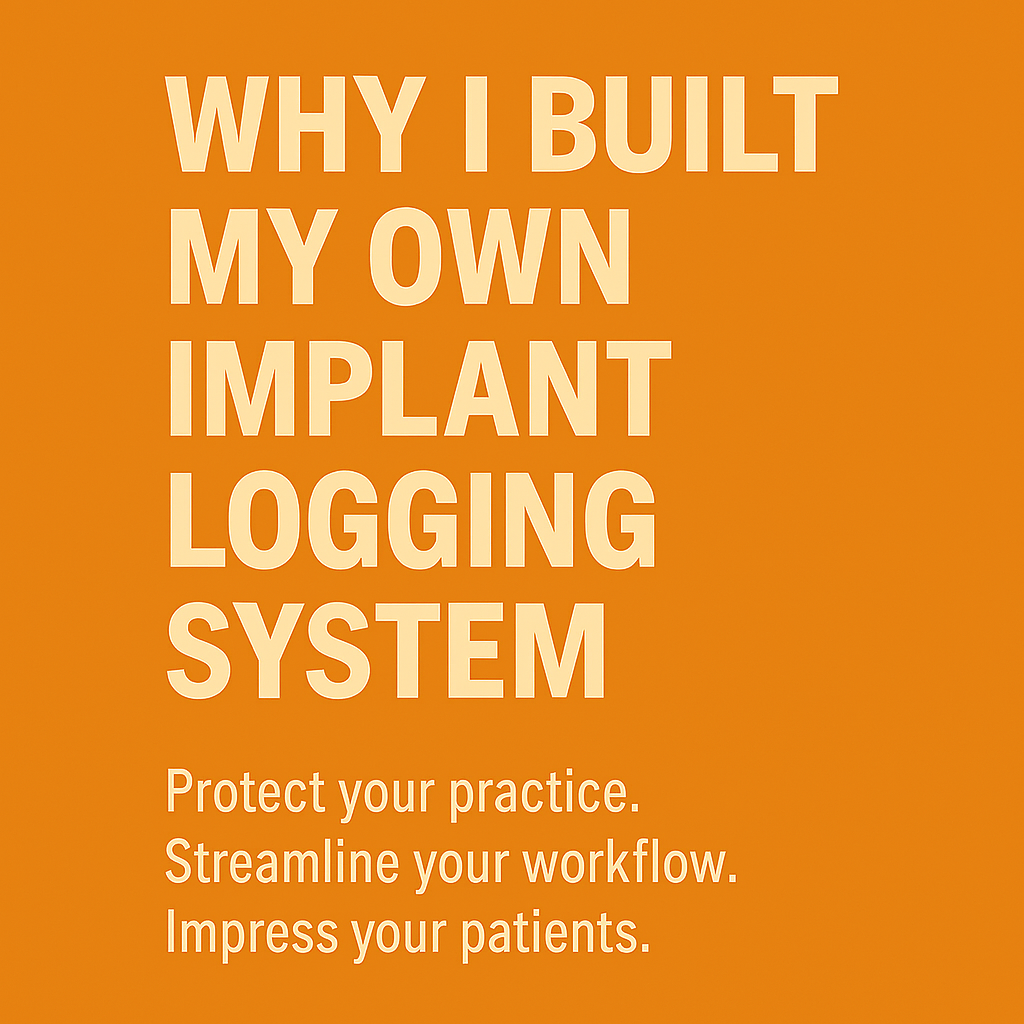
If you’ve trained formally in implant dentistry, you already know: logging every procedure isn’t optional. It’s your clinical safety net, your CPD tracker, and your medico-legal parachute. But how you log it makes all the difference.
Hands-free surgical techniques
By Ashley Watson September 22, 2020
Using Optragate in dental practice makes you life easier and scores you points with your dental nurse.
More Posts